
Journal · October 11, 2026
How to Care for Olive Wood Bowls, Boards and Kitchen Tools
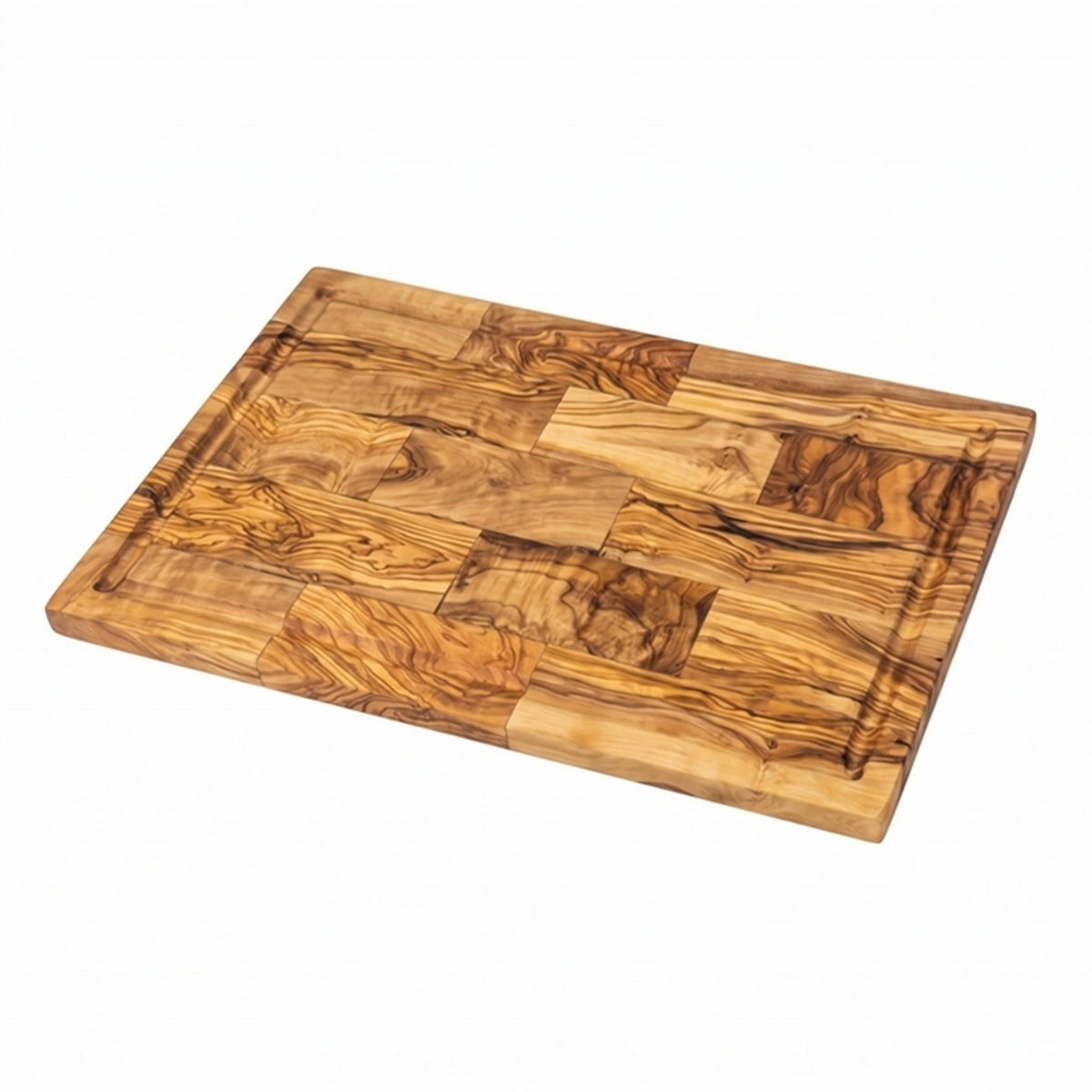
Olive wood is dense and close-grained, with dark loops running through it because the tree grows slowly and twists as it goes. A well-kept olive wood bowl or board lasts for years, and keeping it that way takes about a minute after each use and a few minutes every couple of months.
After every use
- Wash it by hand in warm water with a drop of mild dish soap. A soft sponge or brush is enough.
- Dry it straight away with a towel, then let it finish air-drying standing on its edge, so both sides dry at the same pace.
- Never leave it soaking in the sink, and never put it in the dishwasher. Long soaks and dishwasher heat make wood swell, dry out and eventually crack.
Oiling, every few months
When the surface starts to look pale or feels dry to the touch, it is time to oil it.
- Make sure the piece is clean and completely dry.
- Pour a little food-safe mineral oil onto a soft cloth and rub it in, following the grain. Do the outside and the underside too.
- Leave it to soak in for a few hours, or overnight.
- Wipe off whatever is still sitting on the surface.
Most pieces only need this every few months. A board used for cutting every day will want it more often. The color deepens a little each time, which is part of the appeal.
Smells and stains
Garlic, onion or fish smell: rub the surface with half a lemon dipped in coarse salt, rinse, and dry it straight away.
Stains from wine, berries or turmeric: the same lemon and salt trick usually lifts them. For stubborn marks, leave a paste of baking soda and a little water on the stain for a few minutes, then rinse and dry.
A slightly fuzzy surface after the first few washes is the grain lifting as it meets water. Smooth it with very fine sandpaper, wipe off the dust and oil it again.
A few specifics
- Cutting boards: wash and dry both sides, even if you only cut on one, so the board dries evenly and stays flat.
- Mortar and pestle: wipe out dry spices with a dry cloth; wash with water only after wet ingredients like garlic or pesto, and dry it right away.
- Salt cellars: wipe them out rather than washing them, and only refill when the inside is completely dry.