
Journal · October 11, 2026
Acacia vs. Olive Wood: How to Choose a Serving Board or Bowl
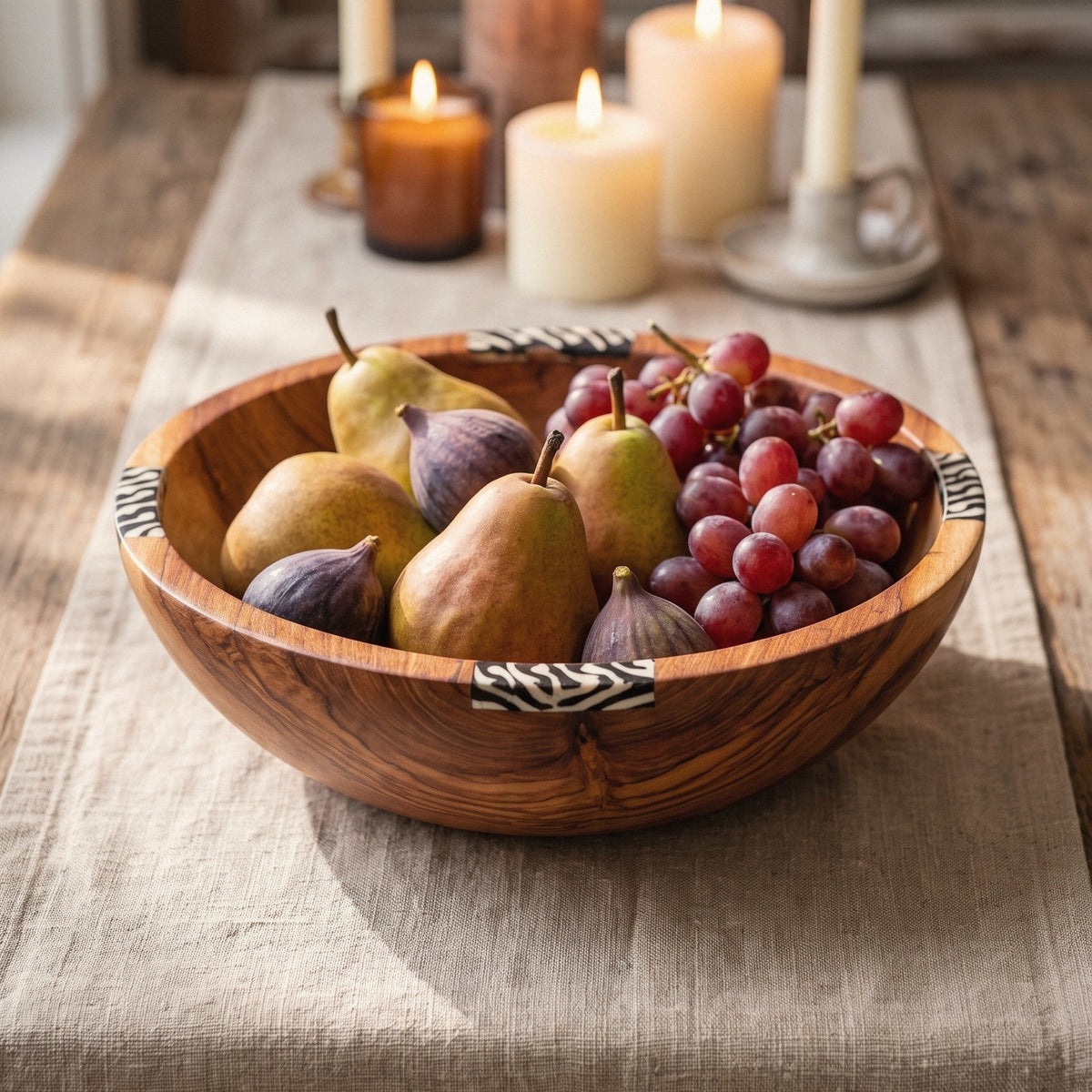
Acacia and olive wood are the two woods you will see most often in serving boards and bowls. Both are hardwoods, both look warm on a table, and both are cared for the same way. The real differences are in the grain, the weight and how big a single piece can be.
Acacia
Acacia runs from honey to deep chocolate brown, often in bold stripes where lighter and darker wood sit side by side. It is widely available in large pieces, so it is the usual choice for big items: large trays, salad bowls, platters and lazy susans. For its size, an acacia piece is also lighter to carry than the same thing in olive wood.
Good for: large serving trays, salad bowl sets, platters, lazy susans and anything you will carry across a room full.
Olive wood
Olive trees grow slowly and twist as they grow, so the grain runs in dark loops and swirls instead of straight lines. The wood is dense, close-grained and noticeably heavy in the hand. Olive trunks are rarely straight or wide, so most olive wood pieces are small, or, like larger boards, built from several blocks joined together into a patchwork.
Good for: cutting and serving boards, salt cellars, mortars and pestles, small bowls, and anything you want to leave out because it looks good.
Side by side
| Acacia | Olive wood | |
|---|---|---|
| Look | Honey to dark brown, often striped | Pale gold with dark loops and swirls |
| Weight | Moderate | Dense and heavy |
| Typical size | Large pieces are common | Mostly small, or built from blocks |
| Best for | Trays, salad bowls, lazy susans | Boards, salt cellars, mortars, small bowls |
| Care | The same: hand wash, dry right away, oil every few months | |
Caring for either one
Wash by hand, dry straight away, keep it out of the dishwasher and rub in a little food-safe mineral oil every few months. Our olive wood care guide goes through the routine step by step, and it works the same way for acacia.